8 January 2012

Easy Sewing Projects for Beginners

Easy sewing projects for beginners - Tilly and the Buttons

You've got to grips with your sewing machine, and now you're itching to make something! What project should you choose to get started? There are so many sewing patterns out there, so how do you pick one that will start you off on your sewing journey without being overwhelming?

Here are my tips for choosing a sewing project that's nice and easy for beginners…

Update: We made a video to accompany this post - check it out on our YouTube channel now!

Easy sewing projects for beginners - Tilly and the Buttons
Jaimie pyjamas sewing pattern by Tilly and the Buttons

1) Start with simple construction

Ease yourself in gently with a project that doesn’t require tricky techniques or precision sewing. Look for straight lines and not too many pieces, and avoid details such as darts, gathering and pleating until you’ve got a few makes under your (homemade) belt. Start simple, and you can progress to the more complex projects later on.

Try these cute and easy-peasy projects to show you the basics of construction - the Dominique skirt, which is basically sewing straight lines, and the Jaimie pyjamas, which come together quickly and easily (plus there's a free video tutorial for sewing them from start to finish!).

6 January 2012

How to Stitch: Part 2

How to Stitch pt.2 - sewing straight lines, curves and corners - Tilly and the Buttons

I've shown you how to set up your sewing machine, thread it and start stitching. Now I'm going to take you through sewing straight lines, curved lines and corners.

How to Stitch pt.2 - sewing straight lines, curves and corners - Tilly and the Buttons

Stitching a straight line

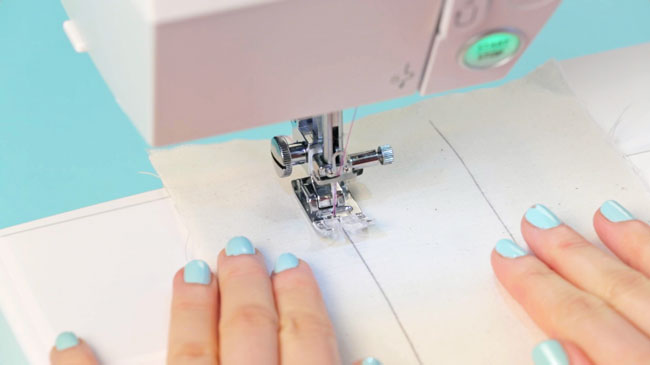
Once you’ve got the hang of stitching willy-nilly, you’ll want to practise sewing in a straight line. To get started, try drawing a straight line directly onto a piece of cotton fabric. Use this line as a guide - take a bit of time getting used to controlling how the fabric goes through the machine, until you’re happy with your straight lines.

How to Stitch pt.2 - sewing straight lines, curves and corners - Tilly and the Buttons

Stitching a curved line

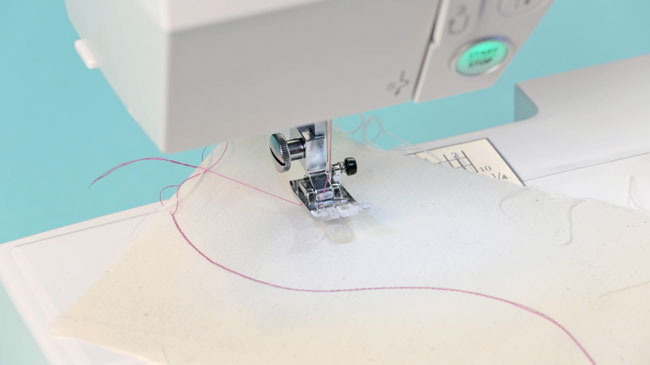
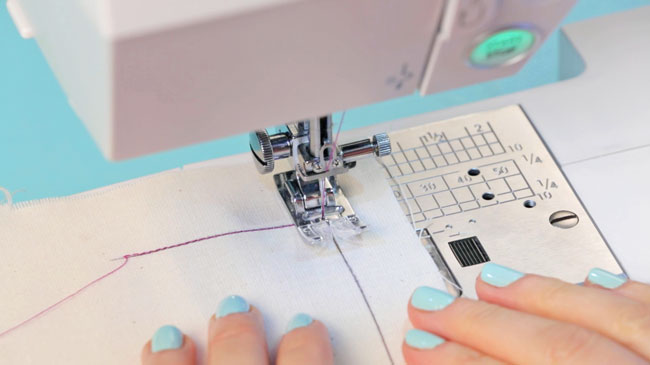
Once you’ve mastered stitching in a straight line, how about trying a curve or two? Draw a wavy line onto your fabric, keeping the bends of the curve nice and large for now (you can narrow them as your stitching gets more precise). Place the fabric onto your machine so the presser foot is lined up in the direction of the first bit of the curve.

How to Stitch pt.2 - sewing straight lines, curves and corners - Tilly and the Buttons

When you stitch, you’ll want to gently guide the fabric with your hands, keeping the presser foot lined up with the direction of the upcoming part of the curve. It helps to keep your eye on the part of the curve an inch or so in front of the needle, and keep that bit angled straight towards the needle. Go slow, taking as many pauses as you need to keep up with the twists and turns. It does take practice to get the hang of this, so have a few goes until your stitching line is following the drawn line.

How to Stitch pt.2 - sewing straight lines, curves and corners - Tilly and the Buttons

Turning corners

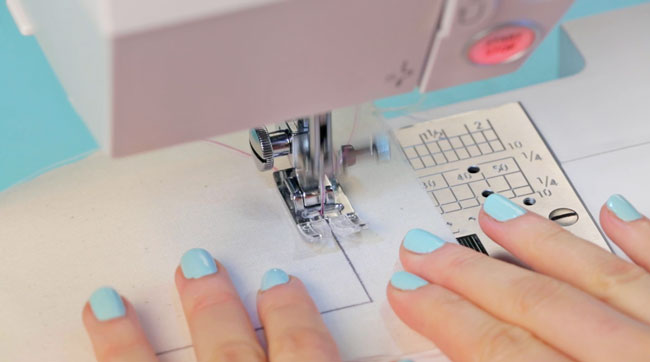
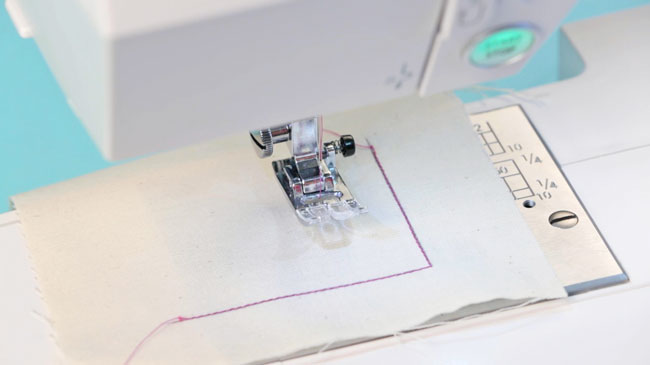
Draw a right angled corner onto your fabric to practise. Start machine stitching along one line until you reach the corner. You want the needle to be pushed down through the fabric right at the point of the corner, so you could use your hand wheel or needle up/down button to help you get to the exact point precisely.

How to Stitch pt.2 - sewing straight lines, curves and corners - Tilly and the Buttons

With the needle down, raise your presser foot so you can pivot the fabric so the next line to stitch is in front of you and pointing straight towards the needle.

How to Stitch pt.2 - sewing straight lines, curves and corners - Tilly and the Buttons

Lower your presser foot again and continue stitching the next line of the corner. Voila!

If you'd like some more help getting to grips with your machine, check out our online video workshop, Make Friends with a Sewing Machine.

5 January 2012

How to Stitch: Part 1

How to Stitch pt 1 - starting and finishing your stitching - Tilly and the Buttons

Set up your sewing machine? Check. Threaded it up? Check. Now comes the fun part - sewing!

Using a sewing machine for the first time can be a little daunting but just relax, take your time and have some fun with it. Practise stitching on some calico (unbleached cotton) or plain medium-weight cotton - basically you want something that’s cheap and not slippery. Pick out some brightly coloured thread that stands out against the fabric so you can monitor your stitches … and marvel at how your accuracy improves with practice!

2 January 2012

How to Set Up Your Sewing Machine


How to Set up Your Sewing Machine - Tilly and the Buttons


First time in front of a sewing machine? Sewn in the past but need a refresher? I'm going to walk you through the basic steps to set up your sewing machine - plugging it in, changing the needle and attaching the presser foot.

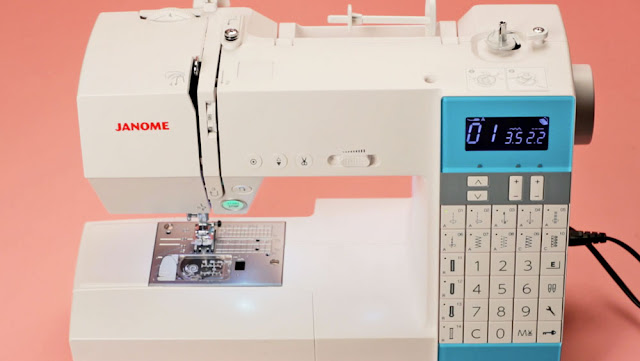
Machines vary, so some of the parts on my machine (a Janome DKS100) may be in different positions to yours, but nothing will be that different that you won't be able to work it out.

Ready to sew? Let's go!

1) Plug it in!

How to Set up Your Sewing Machine - Tilly and the Buttons

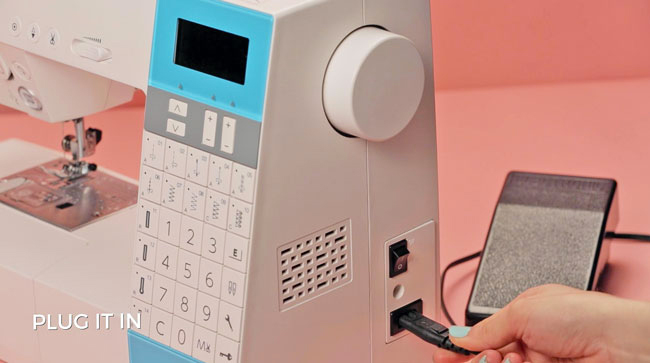
Plug the cable into your machine and the power socket. Plug the pedal in too if it's on a separate lead. Position the pedal on the floor where you can comfortably reach it with your foot while seated.

(Note: You don't need to turn your machine on for any of the steps in this post - it's advisable to leave it off so you don't accidentally sew over your hand!)

2) Change the needle
How to Set up Your Sewing Machine - Tilly and the Buttons

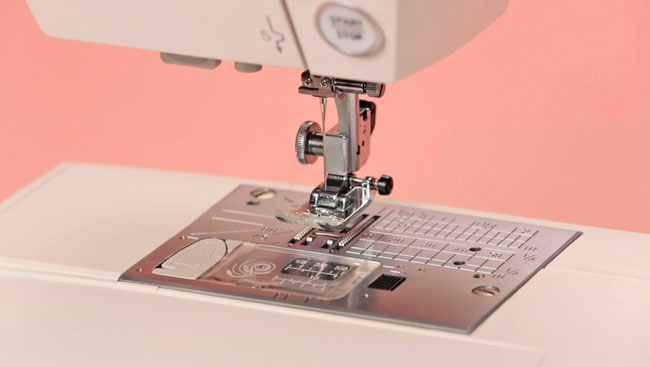
The needle may already be in place, in which case you can ignore this part if you like. But it's useful to know how to change it in case it snaps (eek!), if you want a different sized one (a thick one for thick material, a fine one for fine fabric, ballpoint for jersey...), or if you want to change to a fresh, sharp one every so often.

To remove the needle, twist the little knob to its right a couple of turns - this will loosen the needle so you can pull it out. You may need a small screw driver to do this.

To insert the needle, push it up into the hole and tighten the knob again. The top of the needle is rounded on the front side and flat on the back side so you should be able to tell which way to put it.

3) Attach the presser foot
How to Set up Your Sewing Machine - Tilly and the Buttons

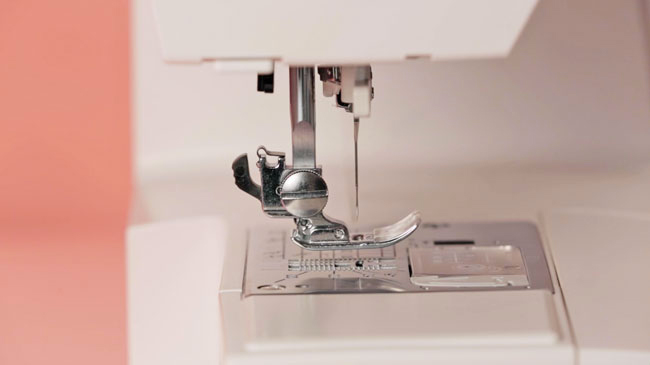
The presser foot is used to hold the fabric down and to guide the needle when stitching. You can get different kinds of feet designed for different stitches and notions, but you don't need to worry about that yet - a standard presser foot will get you far. The presser foot sits on the bottom of the bar behind the needle. There's a lever on the right which you can use to raise and lower it when you need to.
How to Set up Your Sewing Machine - Tilly and the Buttons

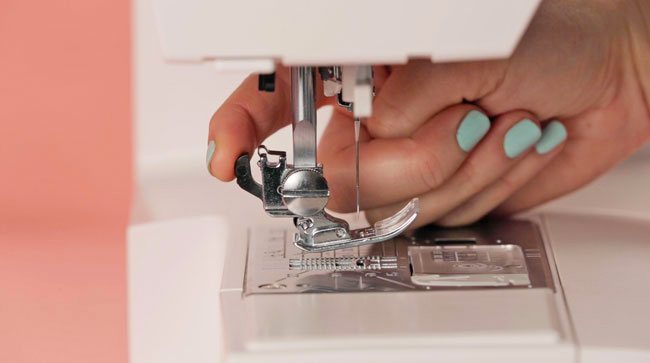
Some feet are attached with screws. My machine is a "snap on". To remove it, raise the bar using the lever on the right, then press the little lever or button at the back of the presser foot (or unscrew it) and it'll drop right off.
How to Set up Your Sewing Machine - Tilly and the Buttons

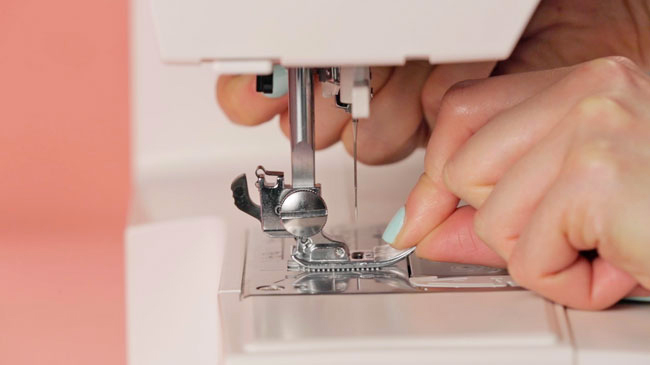
To put the presser foot back on, again you'll want the foot raised to start. Can you see there's a little bar on top of the presser foot? You want to position this bar directly underneath the little claw on the bar - take a look on the left-hand side if you can't see it from the front. Gently lower the presser foot as you shuffle it into the right position - it can take a few goes the first time you do this! Once it's clicked into place, you can raise the presser foot up again.

And now you're ready to thread your machine!

If you'd like some more help getting to grips with your machine, check out our online video workshop, Make Friends with a Sewing Machine.