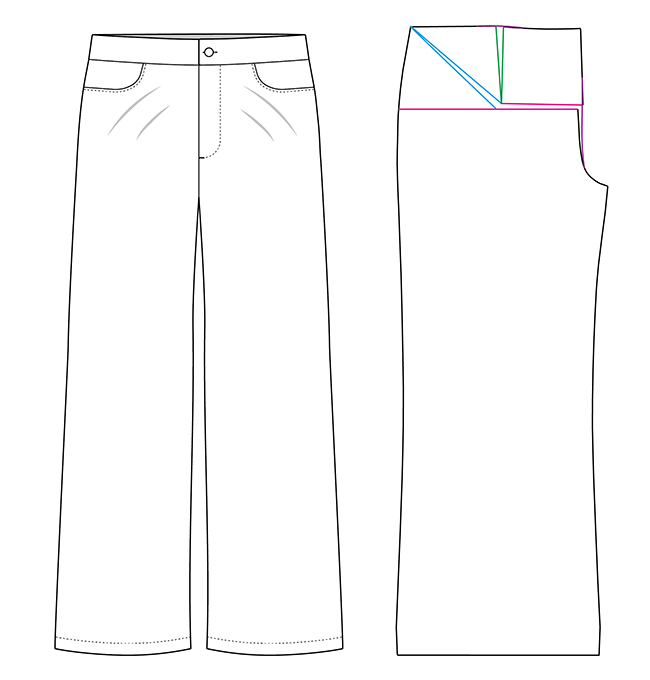
Our Winnie trouser sewing pattern aims to blend comfort with style with a softly rounded barrel-leg shape, a flat-fronted elasticated high waistband, and optional pockets. Nailing the fit at waist, hip, and length means a polished finished result.
In this post, we’ll guide you through how Winnie is designed to fit, how to adjust the rise and leg length, how to grade between different waist and hip sizes, and how to fine-tune the waistband fit.
How the Winnie trousers are designed to fit
The waistband is flat‑fronted with elastic at the back for a comfy yet clean silhouette
The barrel leg is gently rounded, the side seam towards the front, and the leg skimming the body without clinging
The ankle-skimming hem strikes a modern balance - comfortable with flats or boots
Winnie is available in printed and layered PDF formats, with sizes UK 6–34 / US 2–30 / EUR 34–62. Sizes 7-15 (UK 18-34) have been drafted, fitted and graded separately to the other sizes to create a better fit for different proportions, with a bit more room at the waist and a deeper rise.
So you’ve picked out your dream fabric and printed your Luella skirt pattern… now let’s talk about fit!
Luella is available in printed and layered PDF formats, in sizes UK 6-34 / US 2-30 / EUR 34-62 / AUS 6-34.
Luella is designed to be easy to wear, with a comfy elasticated waist and lots of swish from the gathered tiers – but that doesn’t mean we’re skipping the fitting step. In this post, we’ll walk you through how Luella is designed to fit, how to adjust the length, and how to tweak the fit at the waist and hips to suit your body.
Whether you’re new to fitting or a seasoned pro, we’ve got your back...
How the Luella skirt is designed to fit
Luella is all about comfort and flow, with a polished silhouette that looks great dressed up or down.
The top tier is gently shaped to skim your hips, creating a silhouette that’s not too clingy and not too loose – just right!
The lower tiers are gathered and swishy, adding movement and a touch of drama (yes please!).
The waistband is elasticated, but it’s designed to sit snugly at your waist, holding the skirt in place without digging in.
Making the Samara top sewing pattern and need a helping hand choosing your size and fitting? Then you're in the right place 😊
Samara is available in printed and layered PDF formats, in sizes UK 6-34 / US 2-30 / EUR 34-62 / AUS 6-34.
We designed the Samara top to be suitable for beginners, which means it's not only simple to sew, but it's also relatively easy to fit too - yay! Here we'll go through some of the most common fitting adjustments you might want to make to your Samara, but it's most likely you'll only need to make one or two tweaks, if any.
Are you struggling with clothes that are tight across the bust and have excess fabric pooling above? If so, a full bust adjustment (FBA) might be the solution to get the perfect fit when making your own clothes.
In this guide, we’ll show you how to do a full bust adjustment on a dartless bodice - no darts necessary! Whether you're working with patterns like our Samara top, Alexa jumpsuit, Stevie tunic, Bettine dress, Suki dress or Safiya wrap playsuit, these simple adjustments will ensure your handmade clothes fit perfectly.
We've previously covered how to do a bust adjustment for a darted bodice which is definitely worth checking out too.
If you’re new to fitting adjustments, don’t worry - it’s easier than it sounds! Just follow the steps below, and you’ll soon be creating clothes that fit like a dream.
When should you do a full bust adjustment?
Generally speaking, dartless garments are less fitted as they don't have darts which would ordinarily be used to add shaping. Because of this, you might be able to get away with not doing a full bust adjustment on these types of garments, even if you normally do them on other patterns, as there's a bit more leeway in the bust area than on a more fitted garment.
But if your boobs are on the larger side and you usually find that even easy-fitting garments are either too tight in the bust area, or fit across the bust but have a lot of excess fabric pooling above, then you probably need to make a full bust adjustment.
I'm going to briefly cover how you would work out how much to add or subtract from your bust in the adjustment, but do remember this is just a rough framework, and you might not need to do it at all.
Are you planning to make the Cece joggers or shorts and have some questions on fitting? Then look no further as this post is for you!
Cece is available in printed and PDF formats, in sizes UK 6-34 / US 2-30 / EUR 34-62 / AUS 6-34 / 84-155cm (33-61in) hip.
I'm happy to report that the Cece joggers and shorts are designed to have a relaxed fit, so you might find you only need to make a couple of adjustments, or perhaps none at all!
Drew is available in printed and PDF formats, in sizes UK 6-34 / US 2-30 / EUR 34-62 / AUS 6-34.
The good news is, with its deep raglan sleeves and plenty of ease, Drew is designed to be oversized and easy-fitting, so you might find you only need to make a couple of adjustments, or perhaps none at all!
If you only take one thing from this post, remember that you're always going to see some folds and drag lines with this style of sweatshirt - it's all part of the slouchy style, so don't be tempted to overfit it!
In this post, we're going to cover:
Making a toile
Choosing your size
Lengthening or shortening pattern pieces
Combining pattern sizes
Making adjustments for a larger bust
Adjusting the raglan seams for narrow or wide shoulders
Making the Ramona skirt sewing pattern and looking for some tips on how to get a great fit? Well, you're in exactly the right place. In this blog post, we're going to go through some of the most common fitting adjustments you might need for making a gorgeous, fitted skirt.
Ramona is pretty easy to fit, thanks to its four waist darts, centre back seam, and gently curved waistband - I know, we're spoiling you!
In this post we're going to cover:
Making a toile and fitting as you sew
Choosing your size
Lengthening and shortening
Combining sizes
How to do a full bum adjustment on a skirt with darts
How to do a sway back adjustment on a skirt with darts
Do you find that ready-to-wear skirts tend to feel tight around your bum, and that the waistband dips down at the back instead of sitting level all the way around? Or maybe the skirt hem lifts at the back, you have excess fabric pooling at your lower back, and the side seams point diagonally towards the back rather than straight down to the floor? If you're vigorously nodding your head then you might benefit from doing a full bum adjustment on your me-made skirts!
A full bum adjustment adds width and length to the hip area of the back skirt to accommodate a fuller booty. It's a great adjustment to know if you often find you need a little bit more room across your bum, but the skirt fits comfortably on your waist.
I'm demonstrating on the Ramona skirt pattern. You can also use this adjustment on any similar darted skirt pattern.
For this tutorial you’ll need a very quick toile of your skirt, a flexible tape measure, your back skirt pattern piece (trace this off so you're not chopping up your original pattern), a pen or pencil, a ruler, some scissors, some tape or a glue stick, and a bit of paper slightly bigger than your pattern piece.
So, once you’ve got those handy, let’s get started!
Ready to make our new Nell blouse + dress pattern and want to know how to get a great fit? Well, you're in the right place!
Nell is available in printed and layered PDF formats, in sizes UK 6-34 / US 2-30 / EUR 34-62 / AUS 6-34.
Nell is designed to be loose-ish fitting, with bust darts to give some shaping to the bodice, quite a bit of ease at the waist, and a swishy, gathered skirt. All of this means that the pattern is pretty simple to fit, and so you might find you only need to make a couple of adjustments, or perhaps none at all!
In this post, we're going to cover:
Making a toile
Choosing your size
Lengthening or shortening pattern pieces
How to combine pattern sizes
How to do bust adjustments for a bust darted bodice
Are you planning on making the Thea trousers and want some extra help on how to get a great fit? Then look no further as this post is for you.
Thea is a pair of high waisted, wide leg trousers with a choice of two lengths and multiple pocket variations. As we're all different shapes and sizes, there are various adjustments we can do to improve the fit of our me-mades. In this blog post we're going to cover the most common adjustments you may want to consider making to your Thea trousers, but bear in mind you probably won't need to do all of them, or even any at all!
Do you like the idea of making trousers or pants, but feel a little nervous about the prospect of fitting them? Well, fear not, as help is here! This blog post will cover the most common fitting adjustments you may need to make when sewing trousers.
Now, before we go any further, please shake off any ideas you may have about making a perfect, crease-free pair of trousers. They simply don’t exist. Well-fitting trousers allow you room to sit down comfortably, breathe, eat, and to live your best life. They will crease where you bend and move, and will allow you space to do so. Basically, don’t get hung up on eliminating every crease and line – it’s impossible!
With that in mind, we've covered a few different fitting adjustments here, but don't feel like you have to try them all! You may not need to make any alterations to your pattern, or perhaps you feel you need to do just one or two tweaks.
Do I need to make a toile?
If you're not sure whether you'll need to make some alterations, or even what adjustments you might need, it's a good idea to make a "toile" - a mock-up garment in a similar weight fabric you don't mind using to test the fit - so you can see how a particular pattern works on you. We have a comprehensive blog post about toile making. Go check it out if you want to find out more!
Making a toile is more important if you're making something with a close-fitting crotch and bum area, like the Thea trousers, but not always essential if you're making a looser fitting garment, such as the Esti trousers or shorts or the Safiya trousers - unless you know you usually need to make lots of adjustments. For looser fitting trousers, you might want to make a "wearable toile", perhaps in an inexpensive but pretty fabric that you won't mind wearing if it all works out beautifully.
Ready to dive in and learn how to do some common trouser fitting adjustments? Let's go...
How do I add more room to the stomach area? AKA a full tummy adjustment
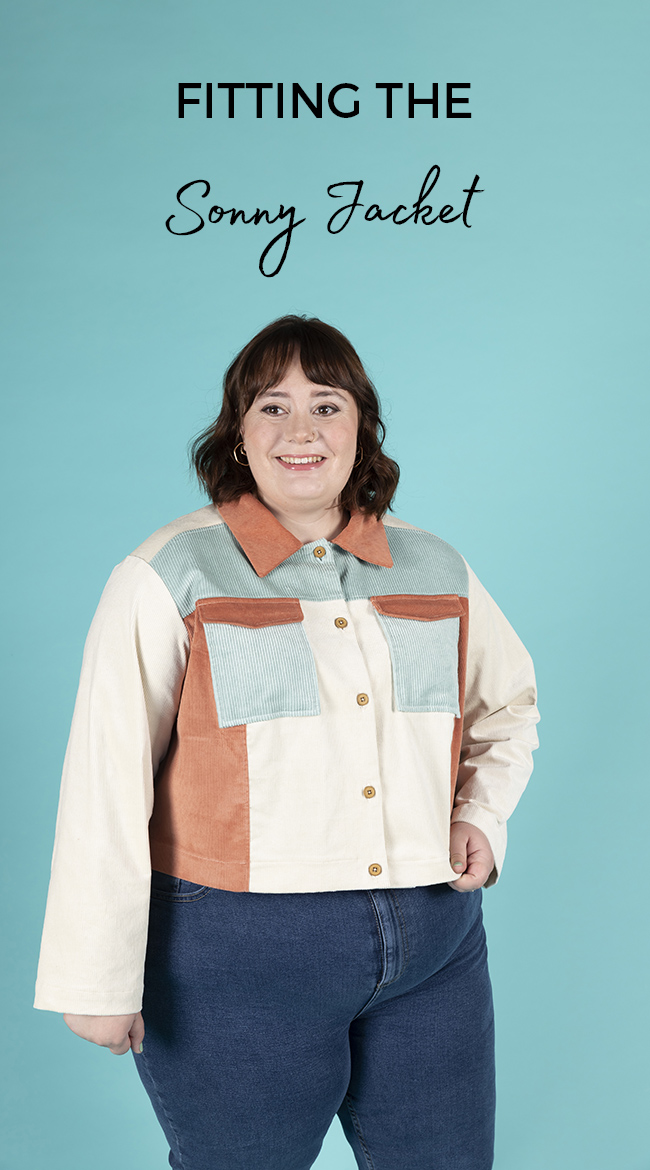
If you're thinking of making the Sonny jacket and have a few questions about how to get a great fit, you've come to the right place.
Sonny is an ultra-versatile jacket with a relaxed, boxy fit, making it simple to fit. Good stuff! However, as we are all wonderfully unique in shape and size, you might want to make a few changes to your pattern pieces to make it suit your body better. Here, I'm going to talk you through the most common fitting adjustments you might want to consider making to your Sonny jacket.
In this post we're going to cover:
Making a toile
Choosing your size
Lengthening or shortening pattern pieces
How to combine pattern sizes
Making a toile
A toile - or a "muslin"- is an initial mock-up of your garment in fabric you don't mind using for testing purposes. A toile is a great opportunity to test the fit of a sewing pattern or practice a technique, like inserting a collar, before you cut into your nice fabric.
The Sonny jacket is a relaxed fit, meaning you don't necessarily need to make a toile for fitting purposes. If you're planning on wearing your favourite chunky knit under your Sonny and want to check it will be comfortable, we recommend making a quick toile of the front and back bodice pieces and sleeves to check the fit. Pick a fabric with a similar weight and drape to the fabric you have in mind for your final project.
Do you ever wish your me-mades fit better across the bust? Do you find that excess fabric seems to pool around your bust, or that it's too tight? Ever think that the bust darts point in the wrong place on your garments? If you're finding yourself nodding enthusiastically in agreement to any of these statements, then you probably need to do a bust adjustment to your bodice pattern pieces.
It's Nikki here, Product Manager and fitting geek at Tilly and the Buttons, and I'm going to to talk you through how to do a full bust adjustment, a small bust adjustment and how to move the dart on a bust darted bodice.
Now, before we go any further I'd like to give you a little positive pattern pep talk. There are a few diagrams in this post, but whilst they might look quite daunting, they are relatively simple if you follow them step by step :)
How do I know if I need a bust adjustment?
There's a technical and a not-so-technical answer here! The answer depends on your own unique shape and the fit of the garment - you may not need to do a bust adjustment to a loose top or dress, but might have to do one on something more fitted. If you find that things are generally either too tight or too loose in the bust area, then I'd recommend making a quick toile of the bodice, or wearable toile of the whole garment to test the fit around the bust and take it from there. I'm going to briefly cover how you would work out how much to add or subtract from your bust in the adjustment, but do remember this is just a rough framework, and you might not need to do it at all.
Measure your high bust (your upper chest, just under your armpits). If you're making one of our patterns that comes in sizes UK 6-24, or which comes in sizes UK 6-34 and you're making size 6-16, add 5cm (2in). If you're making one of our patterns that is in sizes 16-34, or which comes in sizes 6-34 and you're making size 18-34, add 10cm (4in). Choose the pattern size with that bust measurement – this is the size you’ll do your bust adjustment on.
Now measure your full bust (fullest part, around the nipples) and compare it to the bust measurement on the pattern size you just selected.
If your full bust is 5cm (2in) smaller than the pattern, you’ll be subtracting 5cm (2in) from the pattern; if it’s 7.5cm (3in) bigger, you’ll be adding 7.5cm (3in) and so on. If you need to make the bust bigger, you'll need to do a full bust adjustment (FBA) and if you need to make it smaller, you'll need to do a small bust adjustment (SBA).
Since the front bodice pattern represents one half of the top, as the fabric is cut on the fold - or one boob - you'll be adding or subtracting half of that difference. So, if you want to do a 5cm (2in) full bust adjustment, you'll need to add 2.5cm (1in) to the pattern piece.
There are a few ways in which you can do a bust adjustment, but the method I'm going to show you today is the "slash and spread" method. It sounds a bit aggressive but this just means that you do the adjustment by cutting into your pattern piece and either spread it apart to create more space at the bust, or overlap it to make it smaller.
To do a bust adjustment you will need:
a ruler (or pattern master if you have one)
glue stick and/or sticky tape
pencil
paper scissors
extra paper
As you'll be merrily snipping into your pattern piece with wild abandon for these adjustments, I thoroughly suggest tracing off the front bodice pattern piece so you can keep the original one intact in case you need to make any further adjustments. Make sure you trace all the notches, the dart and 'lengthen or shorten here' lines onto the new pattern piece.
Got your scissors and ruler at the ready? Ok, let's go. And remember, you've got this!
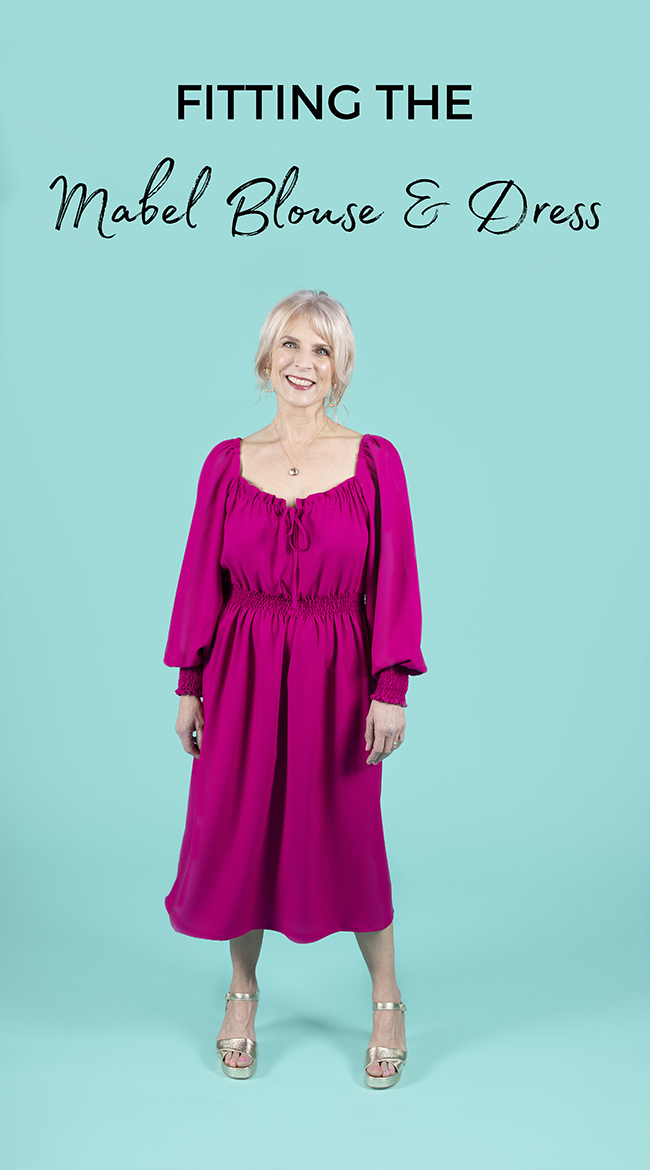
Crushing on the Mabel dress and blouse pattern but not sure how to get a great fit? In this blog post we're going to talk you through the most common fitting adjustments you might (or might not!) want to make.
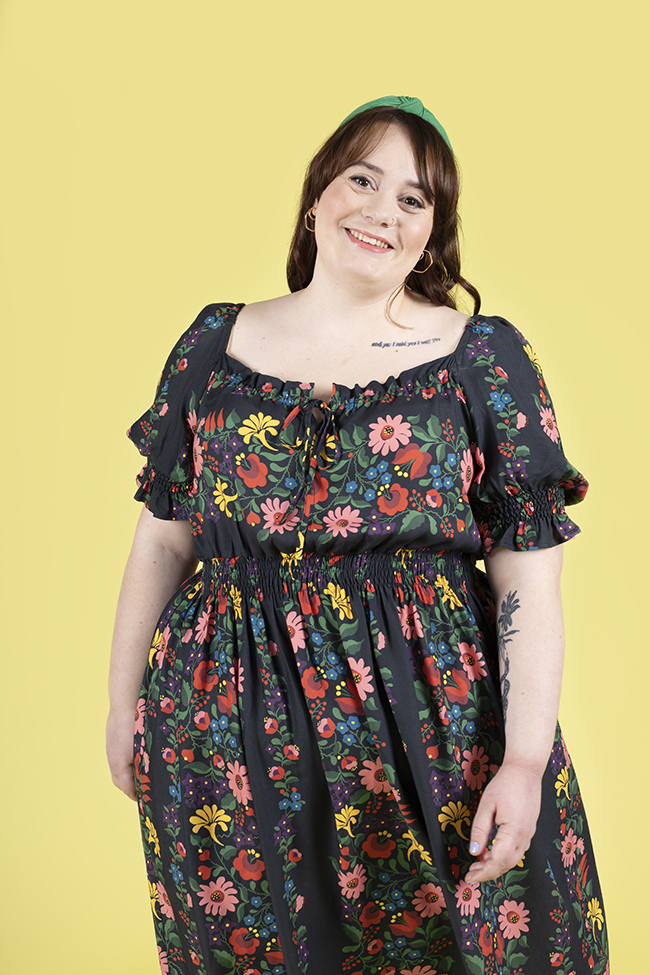
Mabel is a dream sewing pattern. Not only does it look sensational (OK, we might be a little biased), it's relatively easy to fit too. The blousey bodice, elasticated shirred waist, and wide skirt offer comfort and ease in the bust, waist and hip areas, so don't require close fitting. The areas that might need tweaking, depending on your body, are the elastic length in the shoulders and neckline, and we'll explain how you can do this below.
In this post we're going to cover:
Making a toile
Choosing your size
Do I need a full bust adjustment (FBA)?
Lengthening or shortening pattern pieces
How to combine sizes
How to adjust the neckline and shoulders
How to adjust the sleeve shirring
Checking the hem balance
Making a toile
A toile - or a "muslin"- is an initial mock up of your garment in fabric you don't mind using for testing purposes - pick something similar weight and drape to the fabric you have in mind for your final project. Making a toile is a great opportunity to test the fit of a sewing pattern, or practise a technique on sacrificial fabric before you cut into the nice fabric you have lovingly chosen and purchased for your project.
For Mabel, we recommend you make a toile to check the lengths of the elastic around the shoulders and neckline. Or how about making a "wearable toile" - this is a practice garment in fabric that you don't mind ditching if the fit isn't quite right, but you like enough to wear just in case it fits you well first time. You'll want to check the fit of the bodice, sleeves and peplum, so the top version is perfect for a wearable toile.
Mabel includes all 15 sizes in our range. Pattern sizes 1-6 (UK 6-16) and 7-15 (UK 18-34) have been drafted, fitted and graded separately to create a better fit. For this reason, you may notice the proportions change in the measurements chart and the shaping is slightly different on the pattern pieces – sizes 7-15 include room for a larger bust (10cm/4in difference between high bust and full bust, as opposed to 5cm/2in difference on sizes 1-6) and a bit more room at the waist.
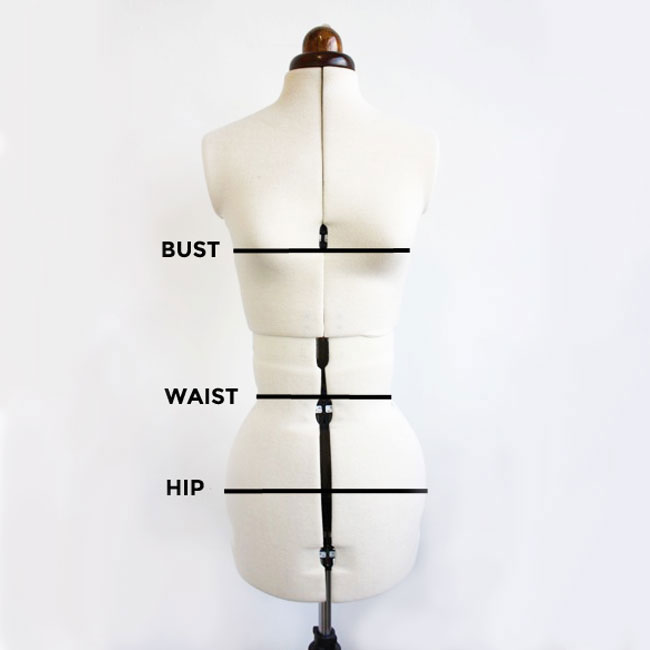
To find your size, using a flexible tape measure, measure the circumference of your:
Bust - take the measurement at the fullest point i.e. around your nipples
Waist - where you bend at the side
Hips - the fullest part - it helps to turn to the side and look in a mirror to see where this is
Check the tape measure is sitting level with the floor - it can help to turn to the side and look in a mirror to check.
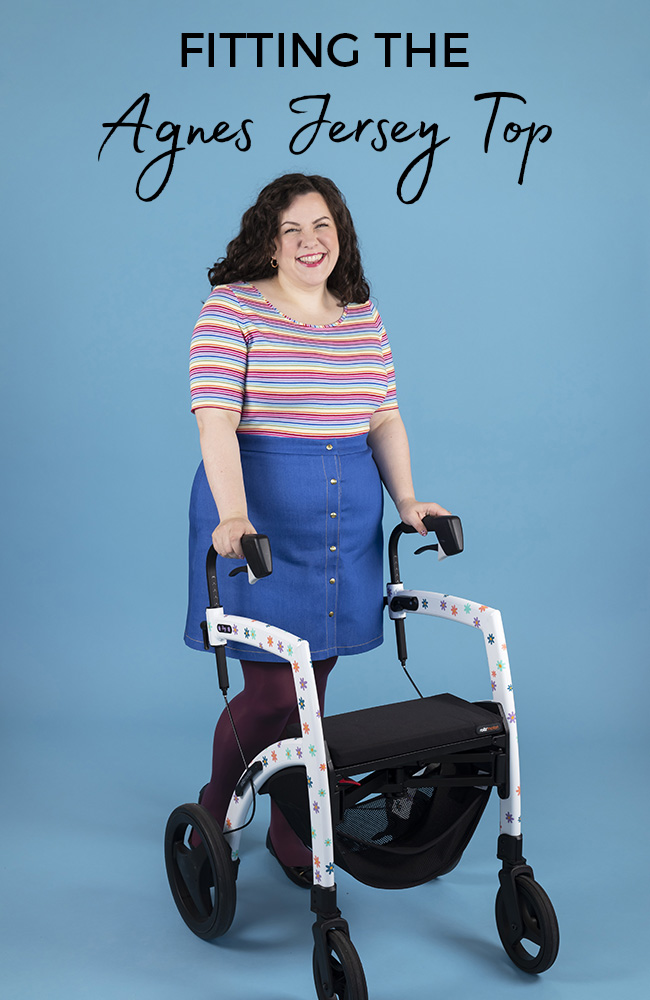
Making the Agnes top and want some extra tips on fitting? This post will cover the most common fitting adjustments you may need when sewing Agnes.
Agnes is now available in printed and PDF formats sizes UK 6-34 / US 2-30 / EUR 34-62 / AUS 6-34. As it's designed to be made in stretchy jersey, it's relatively simple to fit.
In this post we're going to cover:
Choosing your size
Lengthening or shortening the bodice or sleeve
Combining sizes or resizing the bust
Widening or narrowing the shoulder
Changing the neckline
Narrowing or widening the sleeve
However, don't think you have to make all of these adjustments - you may need one or two, or maybe none at all!
Do your bust, waist or hip measurements fall across different sizes? If so, you can "grade" between sizes to get a perfect fit. Hooray! It's Nikki here, Product Manager and self-confessed fitting nerd here at Tilly and the Buttons, and in this post I'm going to cover how to combine sizes on pattern pieces.
One of the best things about sewing is that you can create clothes that fit your unique body shape. If you have bust, waist and hip measurements that are different sizes, like me, you'll probably have stood in a clothes shop fitting room before, surrounded by a pile of clothes that are too loose on top and too tight across your hips, or vice-versa. Luckily, when it comes to making your own clothes, you can combine pattern sizes to make parts of the garment bigger or smaller to give you a truly bespoke fit.
When should I combine pattern sizes? Now, it might be tempting to combine sizes for the bust, waist and hips on all your patterns, but depending on the fit of the garment you don't always need to do this. If you're making a looser fitting garment or a garment that is looser fitting in some areas, you might not need to combine sizes at all. A looser fitting garment will have a lot of "positive ease", meaning the garment (or parts of it) will be much bigger than your body, so a few inches difference in that area won't make much difference to the overall fit. So for example, if you're making something with a fitted bust and loose waist and hips, like the Indigo top and dress pattern, and your waist measurement is 2 or 3 sizes different to your bust, then you probably won't need to make any alterations here. The same applies to the hip measurement - the skirt is loose and flowy so a few sizes difference between your body measurements won't affect the fit of the garment. However, if your bust and waist span across more than 3 sizes you might want to consider grading between sizes.
On the other hand, if you're making a garment that is designed to have a closer fit, like the Ness skirt or Etta dress, you will want to grade between sizes at the bust, waist and hip, where applicable, as there is much less ease in these areas.
Please do bear in mind though, if your bust measurement is particularly smaller or larger than the body measurement of the size you have picked, then you might need to do a bust adjustment, as well as combine sizes. Check out our bust adjustments post (coming soon!) for more info!
Most sewing patterns will list the finished garment measurements in their instructions, so if you're a bit unsure whether you need to combine sizes, comparing them against your body measurements will help you decide :)
Do you have a particularly long or short torso, legs or arms? If this sounds like you, you might want to consider lengthening or shortening your sewing patterns to get a better fit.
It's Nikki here, and today I'm going to talk you through lengthening or shortening pattern pieces. The first set of diagrams below show a bodice, which you can adjust if you have a long or short upper body, but you can use the same technique on loads of pattern pieces - trouser legs or skirts if you have long or short legs, sleeves if you have long or short arms, you name it. I’ll also talk you through how to lengthen or shorten the rise on trouser and shorts patterns. This is one of the great things about sewing - you can adjust just the parts you need to get a garment to fit your unique shape.
If you are lengthening a pattern piece that has a matching pair or facing that will be affected by the length - for example, a front bodice will often join a back bodice and sometimes a front opening facing - make the same adjustment to the matching pattern pieces, else you'll end up with a wonky garment (not cool).
Ready? Let's get stuck in to...
How to lengthen a sewing pattern
If you want to lengthen your pattern piece, cut along the bottom "lengthen or shorten" line, to separate your pattern pieces into two.
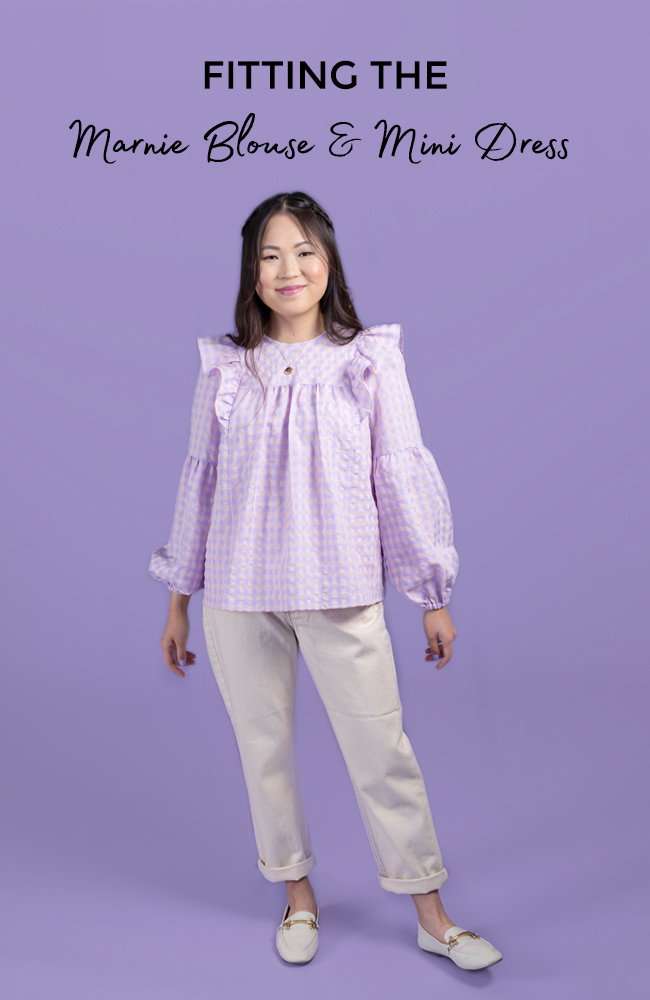
Fallen head over heels for our Marnie blouse and mini dress pattern and want a helping hand on how to get a great fit? You’ve come to the right place 😊
The Marnie blouse and mini dress is suitable for improver sewers and is available in both printed and PDF formats in sizes UK 6-34 (US 2-30 / EUR 34-62 / AUS 6-34). The easy-breezy, swishy design makes for a finished garment with lots of ease, which means not only is Marnie great for twirling in, it's also pretty simple to fit - yay!
Here, I'll talk you through the most common fitting adjustments you might want to consider for your Marnie blouse or dress. However, please bear in mind that Marnie is designed to be easy-fitting and floaty, so you might find you only need to make a couple of our suggested adjustments, or perhaps none at all!
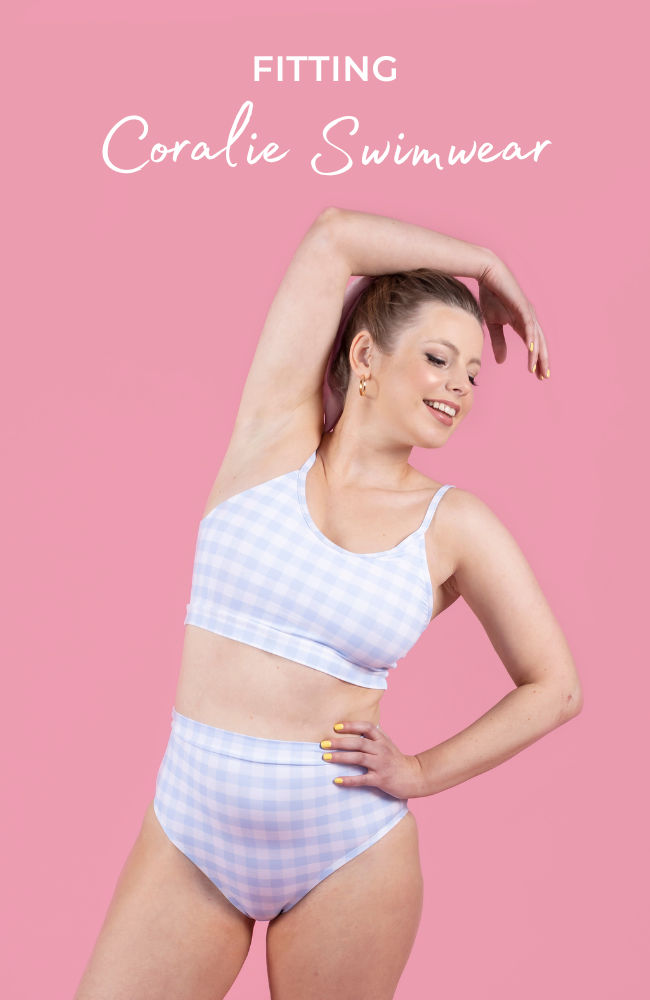
Making the Coralie swimwear and need a little extra help getting the fit just right? Well, you've come to the right place! This post will cover the most common fitting adjustments you might want to consider for your Coralie.
The Coralie swimwear, designed in collaboration with Hannah from Evie la Lùve, is a simple-to-sew, versatile swimwear pattern with multiple versions to choose from. Oh and did we mention it’s got ruffles too?! With so many gorgeous variations to sew we best get cracking!
Our bodies are all wonderfully different and part of the joy of making our own clothes, lingerie and swimwear is that we can customise them completely to our shape and not have to settle with something that "kinda fits" bought from a shop. As with all sewing patterns, to get a perfect fit on the Coralie pattern, you may find you need to tweak the pattern a little bit before cutting out your fabric.
For best results, we recommend making a test swimsuit or bikini – AKA a “toile” – first before sewing in any special or expensive fabrics to check size and fit. It’s super important when making your toile that you use a fabric that has the same amount of stretch and recovery in both directions as the fabric you plan to make your final swimwear from. If it has a different stretch percentage, unfortunately it’s almost pointless making a test garment as it will fit differently. So make sure the stretch percentage is the same before you start, to save wasting your time and fabric! The fabric you use needs to have at least 50% stretch both widthways and lengthways. (Check out the supplies section in the online workshop for how to measure stretch percentage.)
In this post we’re going to cover:
•Choosing your size •Lengthening or shortening pattern pieces •How to combine pattern sizes for different bust, waist and hip measurements •Full bust adjustment •Fixing a gaping seam •Adjusting the leg height •A quick fix for straps that are too long
How do I choose my sewing pattern size?
Taking accurate measurements is the first step in making sure that your swimwear will fit. The three measurements you will need to determine your size are your bust, waist and hip measurements.
Using a flexible tape measure, find the circumference of your:
•Bust – the fullest part of your bust, ie. around your nipples •Waist – the narrowest point around your middle, where you bend at the side •Hips – the fullest part of your bum (not around your hip bones, as the name suggests, which is higher up)
Check the tape measure is sitting level with the floor all the way around. It can help to turn to the side and look in a mirror to check.
Making the Erin dungarees and looking for a few tips on fitting? Welcome to the next step of the Erin dungarees sewalong, supported by Janome. Erin is our latest Tilly and the Buttons sewing pattern and it's an extra special one because it's our first sewing pattern to be printed up to a size UK 34!
Are you following the Erin sewalong? By this point, you'll have been introduced to Erin and will have gathered your supplies and seen our dreamy sewing inspiration boards. Now it's time to get ready to start your project and make any fitting tweaks.
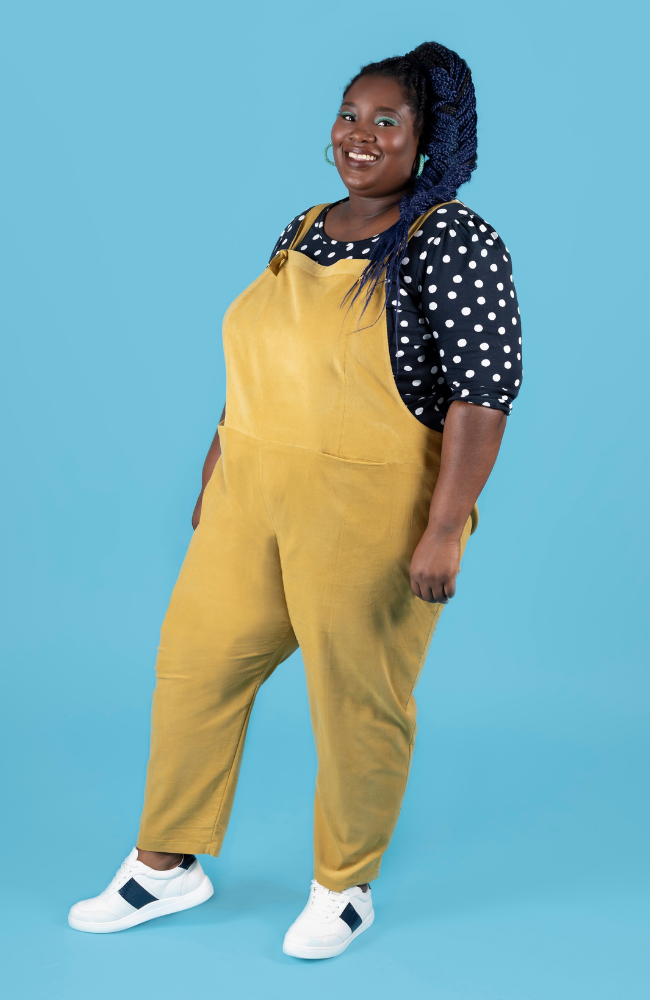
Erin is designed to be loose-fitting, with a lowline waist and crotch, and adjustable straps which allow for a flexible fit - so hopefully any changes you want to make will be minimal - yay!
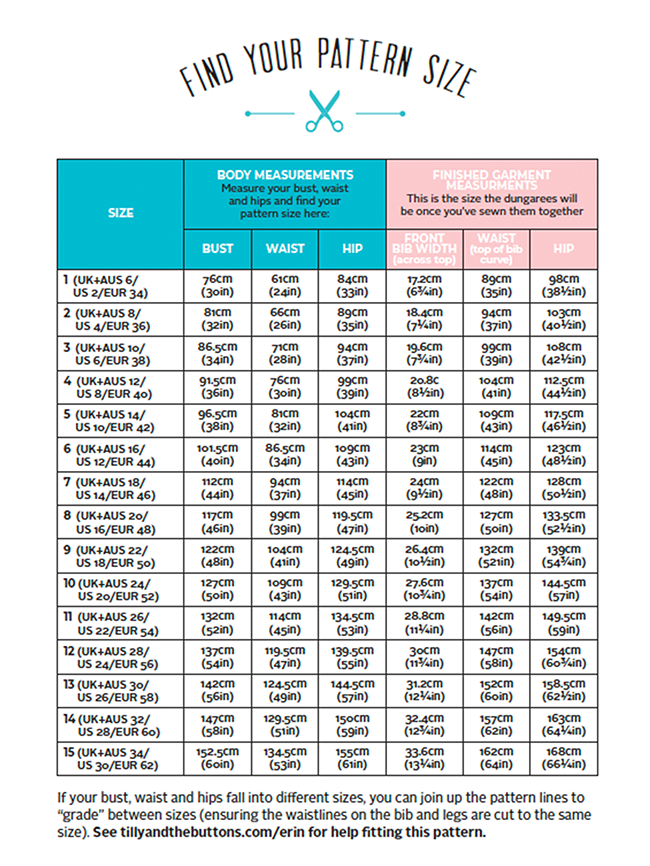
Erin is the first TATB printed pattern to include all 15 sizes in our range. The updated sizing merges our former UK 6-24 and UK 16-34 size patterns to make one pattern in sizes UK 6-34 (US 2-30 / EUR 34-62 / AUS 6-34) that is available in both print and PDF formats.
Sizes 1-6 (UK 6-16) and 7-15 (UK 18-34) have been drafted, fitted and graded separately to create a better fit. For this reason, you may notice the proportions change in the measurements chart and the shaping is slightly different on the pattern pieces – sizes 7-15 include room for a larger bust (10cm/4in difference between high bust and full bust, as opposed to 5cm/2in difference on sizes 1-6) and a bit more room at the waist.
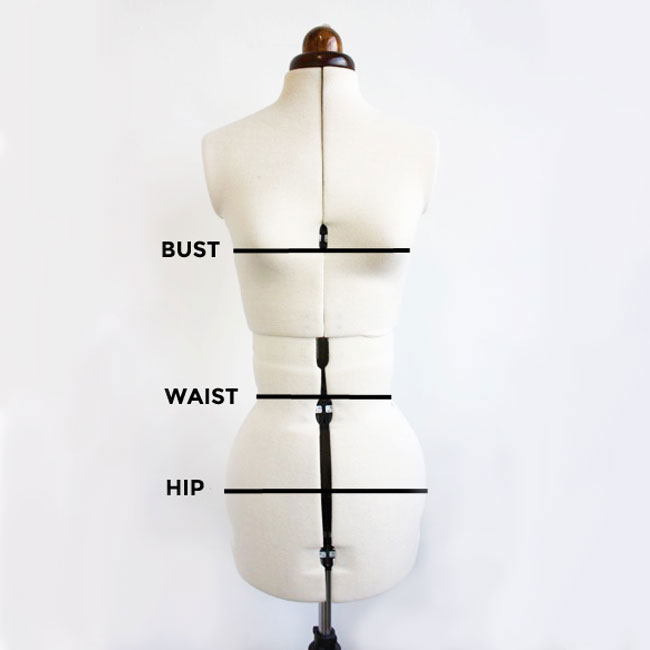
To find your size, measure your bust, waist and hips, by which we mean:
- fullest part of your bust
- waist where you bend at the side
- fullest part of your hips and bum
Make sure you're holding the tape measure parallel to the floor all the way around.
Circle your nearest measurements on the measurements chart in the pattern instructions.
If all fall into one size cut that one… But it's totally normal to fall into different sizes - you can create a bespoke shape for you by “grading” between sizes, which we will come onto in a minute.
Bear in mind the style of the pattern is loose-fitting, so grading isn't always essential. Take a look at the finished measurements chart above to understand how Erin will fit when it's finished.